Practice Makes Empathy ✨
The Cherish Parenting Newsletter Issue #4
Hello there! Forward this issue to a fellow parent who could use Cherish in their life! If a parent forwarded this to you, you can subscribe here.

Editor’s note
As the US entered a new chapter of its history with the inauguration ceremony, I’m at once hopeful and pensive. Hopeful - because we’ve seen the nation’s founding ideals of freedom and democracy hold up against these trying times. Pensive - because I’m wondering what it would take to help this generation of young people make sense of our polarized world and find constructive ways forward. The answer, I feel, is by growing their capacity for empathy and compassion.
I often hear from parents about the shame and frustration they feel when they see their children act without empathy. Parents worry, “What if my teen is selfish?” or “How does this reflect on the way we’ve raised them?”. And that makes sense. After all, parents are often guilted into feeling they are fully responsible for how their teens act because children learn what they see. But this perspective ignores the fact that there are other external influences on our teens’ behaviors (e.g, news, peers, teachers), and that our teen’s behaviors and capacity for empathy are still under development.
And indeed, all of us are growing our ability to be empathetic in this season of uncertainty. We give our co-workers the benefit of the doubt when they’re not on camera during the Zoom meeting. We accept our parents' quirks and outdated views. We give compassion to our students who are struggling with remote learning.
And when being empathetic feels harder on some days than others - that doesn’t make us selfish. It just makes us human. When we can think of ourselves and our practice for empathy this way, we can turn away from shame and towards finding ways to incorporate daily compassion practices into our lives.
We hope you’ll enjoy this issue, which focuses on how you can foster empathetic habits for your family - especially your teens - at home.
Best,
Grace
📖 What exactly is empathy?
Theresa Wiseman at the University of Southampton defines empathy in the following way:
The ability to see the world as another person sees it.
The ability to understand another person’s feelings.
The ability to suspend your own judgment.
The ability to communicate this understanding.
Many of us tend to think that #1 and #2 would be sufficient, but empathy is inherently an experience that involves multiple people and requires an open mind.
One other thing to note in this definition is that you do not necessarily have to be in agreement, nor are you required to take action in order to empathize with another person. Plus, empathy can be learned and practiced, which is always a relief for many (selfishness need not be a lifelong trait – it just takes a growth mindset!).
🌿 How can parents help teens develop empathy?
Lead by example:
Give your undivided attention and use empathetic language while talking with your teen
Ex. “Wow, that sounds really scary.”
Narrate what is going on in your head to help your teen understand more of what other people's internal worlds are like.
Ex. “So my thought process was…”
Encourage your teen to explore how they think others may be feeling in everyday life.
Ex. After watching a Netflix show, compare notes on how you thought a character was feeling in one of the memorable scenes. (p.s., fictional narratives are an excellent tool for teaching empathy by inspiring imagination).
Encourage opportunities for your teen to explore diverse ideas:
Consider opportunities for your teen to volunteer with a cause they care about - virtual opportunities are available for teens who still want to get involved during COVID.
Follow people on social media with different backgrounds.
Read more books that discuss different perspectives together and share reflections (Might we recommend diverse stories and perspectives around the immigrant experience, antiracism, or people of color with autism?).
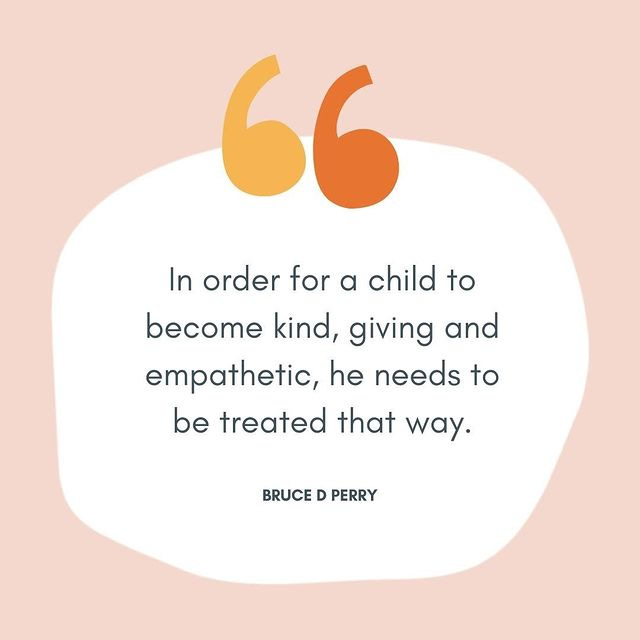
🙌🏿 Let’s practice together
Scenario: Your teen was invited to a party the same night your family planned to go visit their grandparents. Your teen declares that they are going to the party instead.
Response A: “That’s really selfish of you. We all agreed that we would go see grandma and grandpa tonight. Who knows how many more dinners we will have together?”
Response B: “Okay, can you tell me a bit more about why you feel so strongly about going to the party?” “I see. What do you think the night will be like if you came with us to see grandma and grandpa?” “Do you think they would mind if you didn’t come?” “If you can’t come, what do you think you could do to make them feel respected and loved?”
👉🏾 We think Response B would work best. Note that your goal is not to agree with or change your teen’s mind, but to help them reflect on how others may feel and to brainstorm ideas on a possible solution.
Need more coaching? Sign up to receive 1:1 Coaching or join fellow parents in a Parent Circle, today!
❤️ More things we Cherish
1 min - Need quick tips on how to develop empathy? Check out this or this article that highlights how we can incorporate practices into our everyday lives.
5 min - Politics is top-of-mind for many. Here’s a potential way to shift from hostility to empathy while talking about politics.
Deep Dives - How about listening to some fun podcast episodes with your teen? There’s fascinating topics and stories for everyone - how economics exist in space or the mysterious origins of a killer fungus.
About Cherish
Cherish combines research and empathetic support in the form of 1:1 parent coaching, curated parent circles, and personalized content to help parents develop the skills, awareness, and community needed to parent confidently.
For more information, check out our early access page.
P.S. If you find the Cherish Parenting Newsletter valuable, forward it to a friend, or subscribe if you haven’t already. 👇
P.P.S. We’d love your feedback! Take this 1 min survey to help us improve our newsletter.